Artist
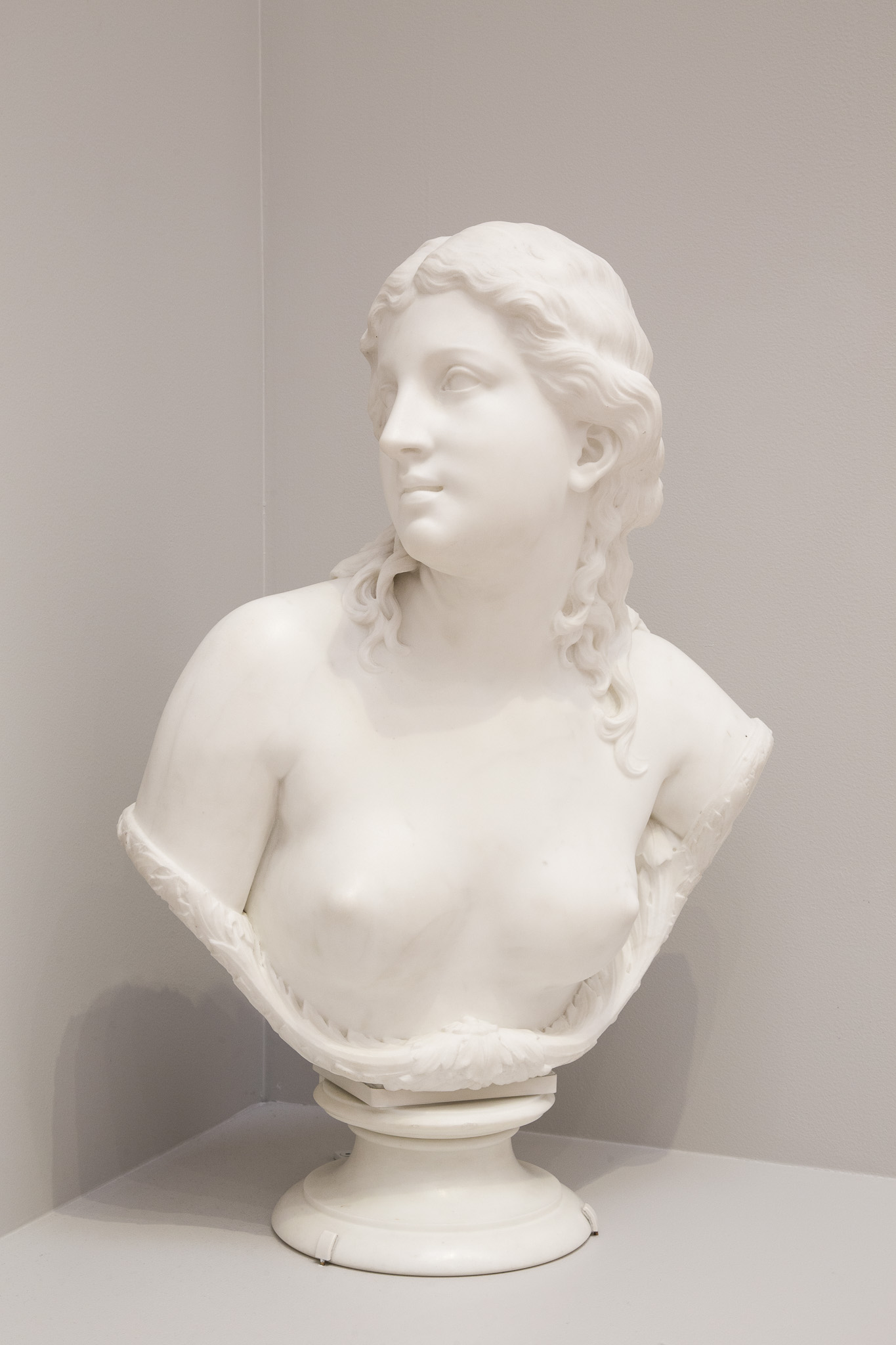
Thomas Ball
Title
Eve
Date
1874
Culture
American
Medium
Marble
Dimensions
73.66 x 53.34 x 22.86 cm (29in x 21in x 9in)
Accession Number
2021.001
Credit Line
Thomas Ball, Eve, 1874, marble, 73.66 x 53.34 x 22.86 cm, Donated to the Timken Museum of Art by the Rowe Collection.
Description
Neoclassical sculpture was an important expression of democratic ideals throughout the 19th century in the United States. Thomas Ball epitomized American artists' interest in heroic depictions of statesmen and other idealized subjects. Ball began his career in Boston. He enjoyed early success for a compelling, bust-sized portrait of the Swedish singer, Jenny Lind. Ball later became renowned for his monumental depictions of George Washington and Abraham Lincoln, as well as Henry Clay and Daniel Webster. Often, these works were cast in bronze for public display. Like other leading American sculptors prior to the Civil War - for example Hiram Powers, Harriet Hosmer, and Edmonia Lewis - he traveled to Italy where he benefitted from the direct study of classical and Renaissance examples. Bust of Eve dates from Ball's years living in Florence and Rome. The bust represents the biblical Eve, mouth parted and, provocatively, depicted nude. This recent, generous gift to the Timken relates to Ball's full-length version of Eve, also carved in marble, but made in Rome in 1867.
RelEvAnt Information / Media
Provenance
Exhibited
Literature
Rights & Reproductions
Note

ADMINISTRATIVE OFFICE
LOCATION & HOURS
Get Directions >SIGN UP FOR OUR NEWSLETTER
Subscribe >


FOLLOW US

.png)