This weekly posting has been used to celebrate Timken paintings and sculpture. It seems fitting to mark a full year of “works of the week” with a note about the museum building itself which is another object of distinction.
Plans for a “free gallery” to house the extraordinary collection of European paintings collected by the Putnam sisters date back to 1951. Amy and Anne Putnam, with guidance from their attorney, Walter Ames, quietly began exploring the idea that year, relying on the advice of leading museum professionals as they patiently moved their project forward. During the time that the Putnams were actively acquiring major works of art for the benefit of the public, and lending their pictures to other prestigious museums. they imagined a new, permanent home for their display in San Diego. By the early 1960s, these plans had evolved significantly for a stand-alone building adjacent to the San Diego Museum of Art, where the sisters had started their philanthropic art donations back in the 1930s. SDMA had been designed by a Beaux-Arts trained architect, William Templeton Johnson (1877-1957) in 1926, using the Spanish-Renaissance-inspired vocabulary that the Panama-California Exposition had promoted so successfully. Ames determined that the Putnam Foundation’s collection ought to look invitingly different. With essential funding from another prosperous client with San Diego connections, the Timken Family, Ames set out to identify an architect capable of building a new, state-of-the-art structure to house the priceless artworks stewarded by the Putnam Foundation.
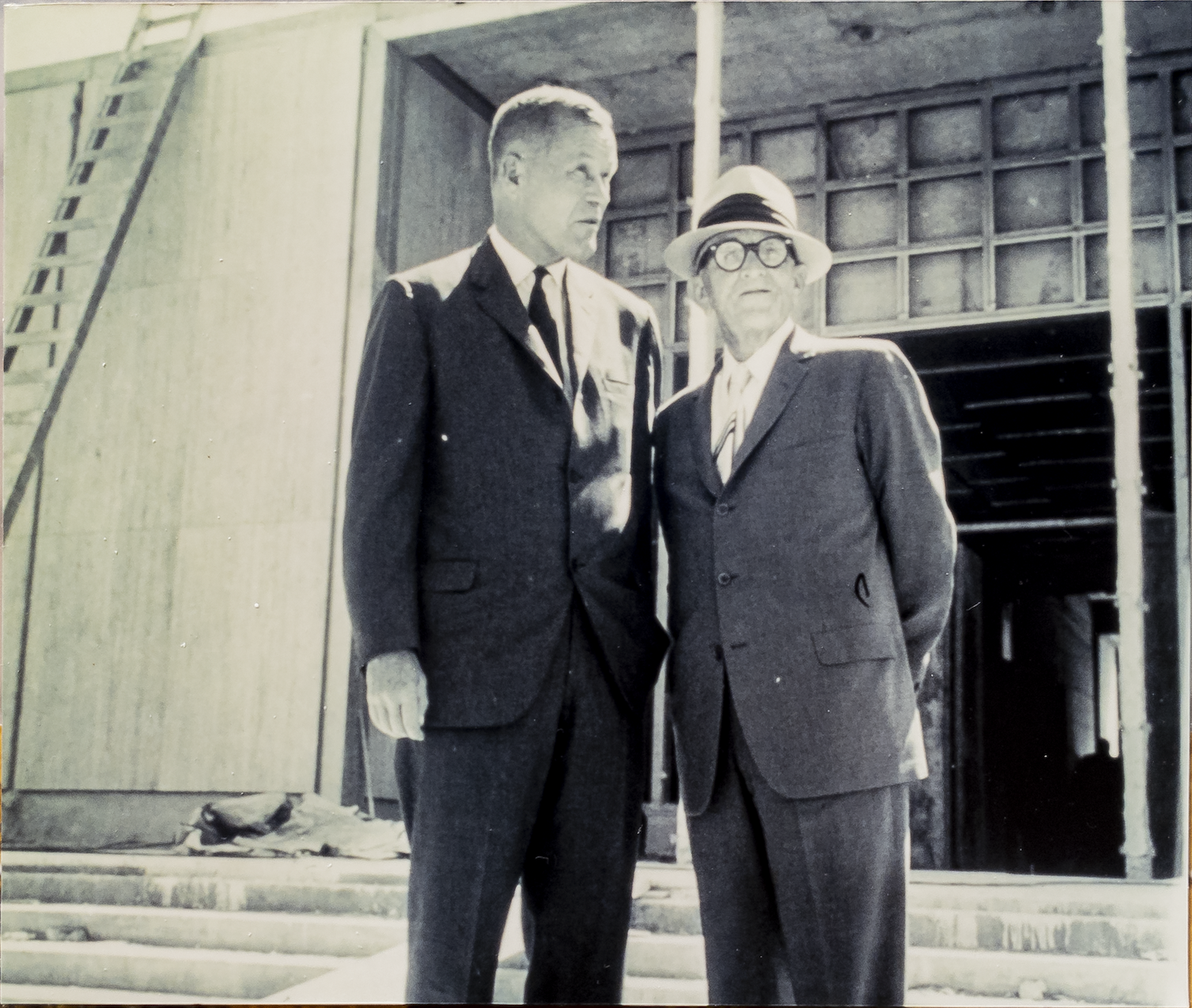
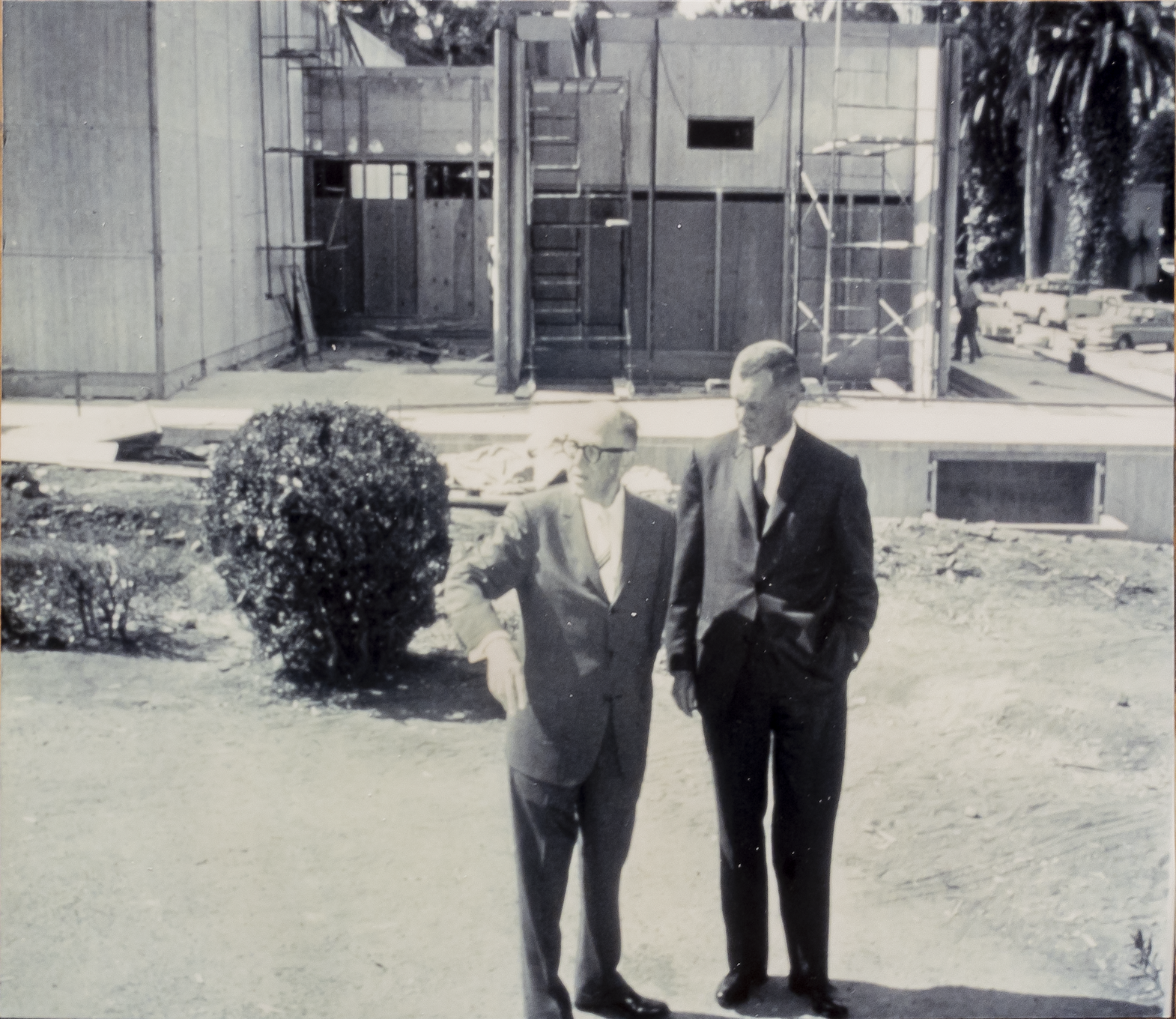
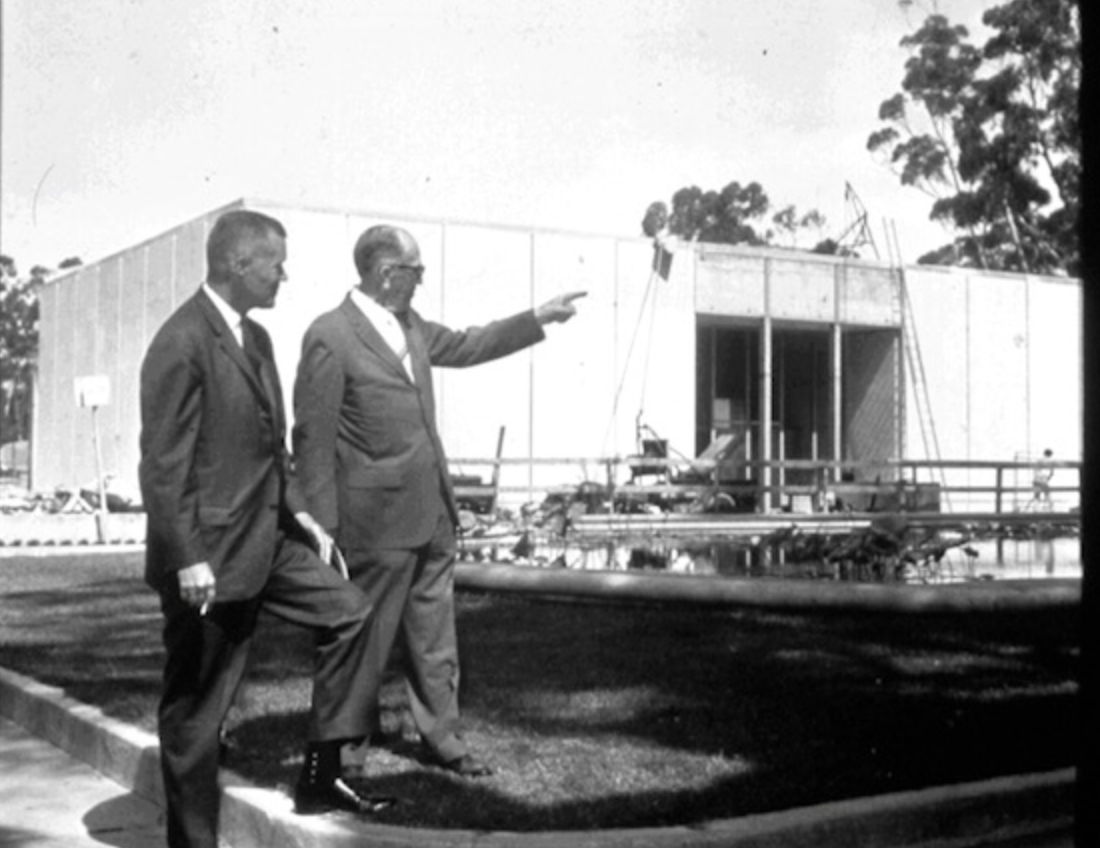
Ames ultimately engaged Frank L. Hope & Associates (later the Hope Consulting Group), a local architectural firm. Frank Lewis Hope, Jr. (1901-1994) came to San Diego as a teenager. It seems likely that he witnessed the architectural transformation then taking place in the city’s Balboa Park. It is hard to imagine that the appearance of Bertram Grosvenor Goodhue’s (1869-1924) landmark California Building (today’s Museum of Us), did not partly inspire Hope’s ambition to become an architect of note. He worked briefly on domestic buildings with legendary figures such as Richard Smith Requa (1881-1941) and Lillian Jeannette Rice (1889-1938) before opening his own firm in 1928. During the 1960s, Frank L. Hope & Associates enjoyed a bustling practice that included numerous important civic structures, including San Diego Stadium (later Jack Murphy/Qualcomm/SDCCU Stadium, recently demolished). Perhaps for this reason, Hope charged one of his younger associates, John R. Mock (b. 1934) with key design responsibilities for the Timken Gallery commission. Walter Ames, deeply engaged in the project on behalf of his clients, provided significant financial and aesthetic oversight.
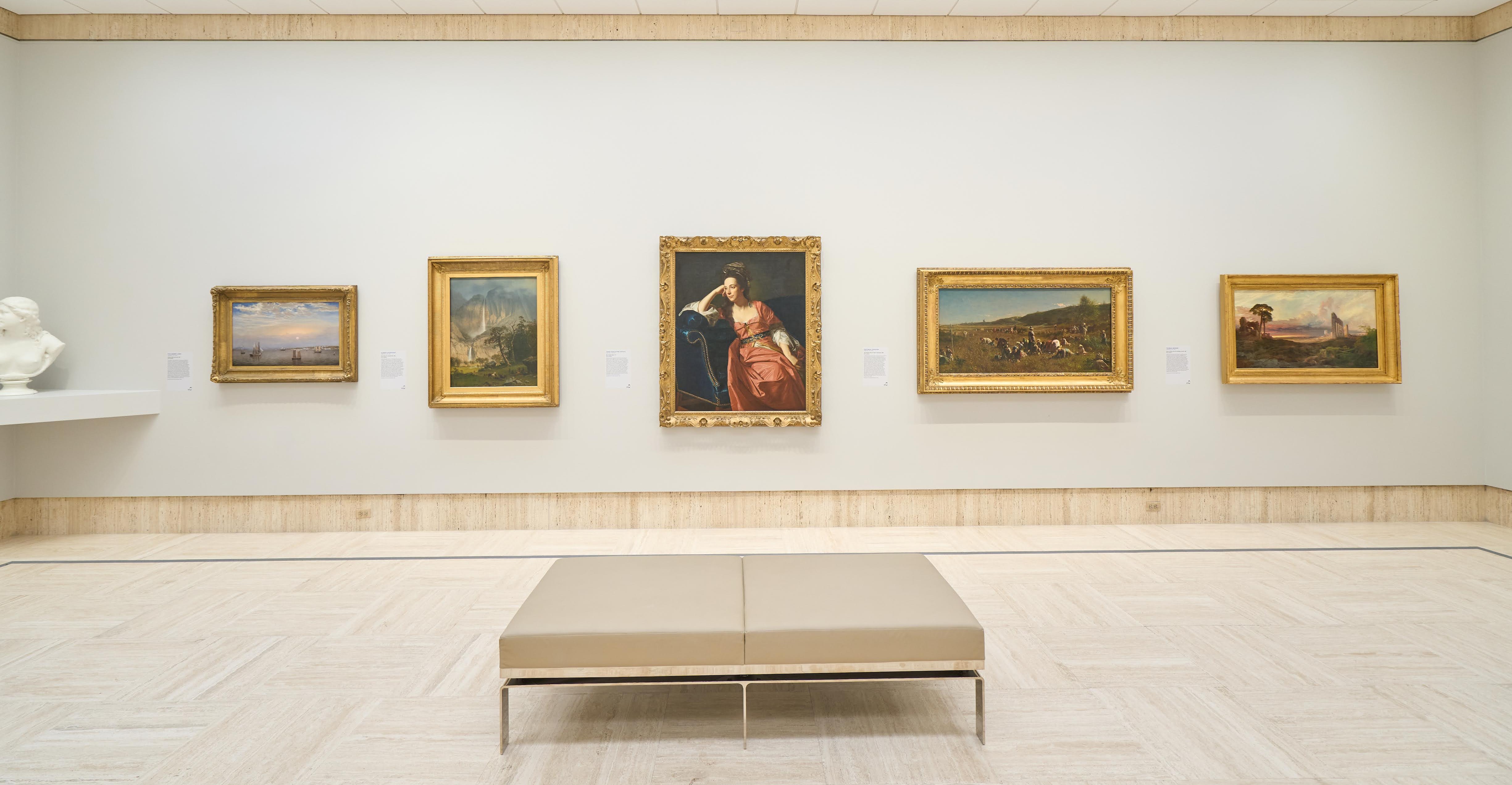
When it opened to the community in October 1965, the building that Mock designed with Ames’s approval looked strikingly different than the reigning revivalist architecture in Balboa Park. According to some with direct knowledge of the construction costs, the Timken Gallery was then the most expensive building per square foot ever built in the city. Not everyone was an immediate fan of the white travertine and glass structure. Nevertheless, the Director of the National Gallery of Art at the time, John Walker, praised it unreservedly as “a jewel box for the arts.” Today, mid-century modernism has wide currency as a retro style, in addition to ardent fans in the architectural community. The Timken is often compared with iconic museums that were finished soon after it: Louis Kahn’s Kimbell Art Museum in Fort Worth (1972), I.M. Pei’s Herbert F. Johnson Museum at Cornell (1973), or Gordon Bunshaft’s Hirshhorn Museum and Sculpture Garden (1974). San Diego is fortunate to have this remarkably prescient example of modernist principles--pure geometries and undisguised use of materials--within its overall ecology of fine museum buildings. When the museum re-opens later this year, Mock’s sense of clarity and gracious public space will again be on full display, enhancing appreciation of the art that we all miss so much.





.png)