-
- Feb. 26, 2026 / 11 a.m. to noon
- Add to mobile calendar
- Add to Google calendar
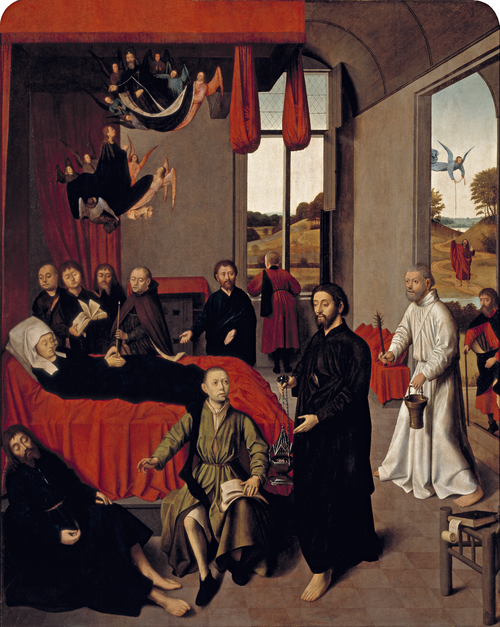
The beautiful city of Bruges was a dominant force in the development of Early Netherlandish painting during the 15th and 16th centuries. The city was controlled by the French Burgundian Court which cultivated not only painting, but the creation of illuminated manuscripts, sculptures, textiles and other industries. Brilliant artists working mainly in Bruges such as Jan van Eyck, propelled the advancement of oil painting, while his successor, Petrus Christus promoted the use of single point perspective. These artists along with Gerard David, Hans Memling, and others utilized incredible detail, vibrant color, and realism in their creations. They were also greatly influenced by the interest of the rich Burgundian court and its merchants who became major patrons of these talented artists. Wealthy merchants from France and Italy also commissioned everything from portraits to multi-panel works with themes mostly of a religious nature. The brilliance of these early Netherlandish artists was also known in other parts of Europe, thus they broadened the influence of the Northern Renaissance into Italy and beyond.

Note that you will be muted upon entry and that this talk is being recorded as well as live-streamed. Please save all questions for the end.

✥ ✥ ✥ ✥ ✥
You can find all of our previous Virtual Talks on our Facebook Page (@timkenmuseum). If you would like to support the continuation of our free tours and education programming, please consider donating to the Timken Museum of Art at https://www.timkenmuseum.org/join-support/your-giving/.