-
- Jan. 22, 2026 / 11 a.m. to noon
- Add to mobile calendar
- Add to Google calendar
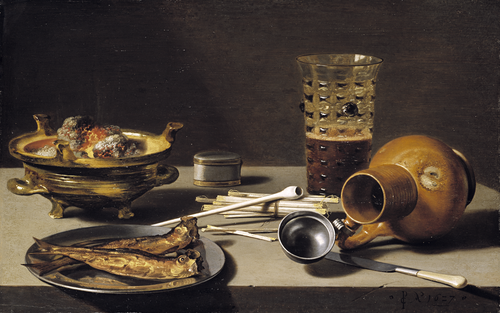
While elements of still life painting existed in the Middle Ages and the Renaissance, the genre truly flourished in the seventeenth century. The Netherlands and Spain saw the most significant developments in this way of capturing a moment in time. In both cultures, artists often employed the concept of vanitas, which reflected the transience of life. Paintings frequently featured fruit, lavish floral arrangements, abundant displays of food, or man-made objects such as books or musical instruments. Artists also included allegorical references to life’s fragility—such as skulls or candles—known as memento mori.
Although still life was often considered a minor genre during the seventeenth century, members of the bourgeoisie eagerly collected these works to decorate their homes. In Haarlem, artists such as Pieter Claesz and Willem Claesz Heda gained popularity for their masterful still life paintings. In Spain, the works tended to be more austere and religious in tone and were known as bodegones. Painters including Francisco de Zurbarán and Juan Sánchez Cotán created exquisite examples of this style.
Works by these artists—and others—will be explored in this docent-led virtual talk.

Note that you will be muted upon entry and that this talk is being recorded as well as live-streamed. Please save all questions for the end.

✥ ✥ ✥ ✥ ✥
You can find all of our previous Virtual Talks on our Facebook Page (@timkenmuseum). If you would like to support the continuation of our free tours and education programming, please consider donating to the Timken Museum of Art at https://www.timkenmuseum.org/join-support/your-giving/.