-
- Oct. 22, 2026 / 11 a.m. to noon
- Add to mobile calendar
- Add to Google calendar
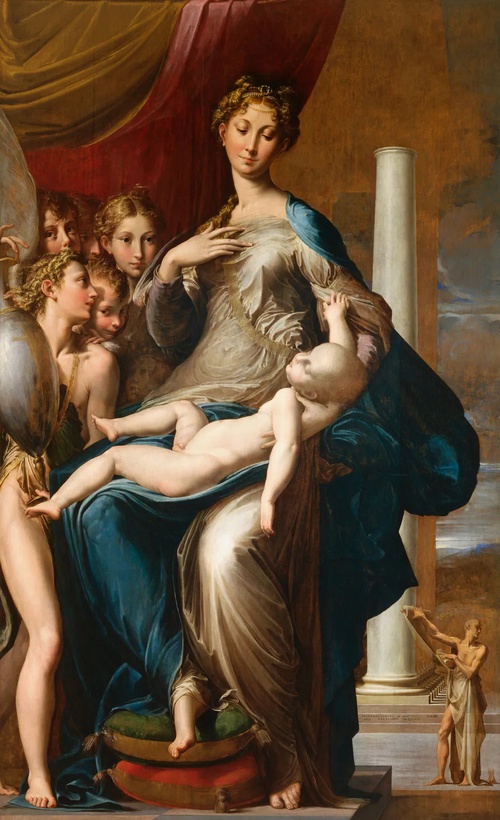
Mannerism originated primarily in Italy. It lasted from approximately 1530-1600 and was a reaction to the harmonious classicism and idealized naturalism of the High Renaissance art as practiced by Leonardo da Vinci, Michelangelo, and Raphael. Mannerist artists created a style that was characterized by artificiality and unique coloration. A thoroughly self-conscious cultivation of elegance and technical facility were part of this artistic movement. Sophisticated indulgence in the bizarre helped to distinguish its artists.
The figures in Mannerist art frequently had graceful, but strangely elongated limbs, small heads, and stylized facial features while their poses seemed difficult or contrived. Painters such as Jacopo Pontormo and Francesco Parmigianino exemplified this unusual and fascinating style of painting. Mannerism began to wane after 1600 as the Baroque began to take hold throughout Europe. The evolution of the movement and its artists will be the focus of this docent-led virtual talk.

Note that you will be muted upon entry and that this talk is being recorded as well as live-streamed. Please save all questions for the end.

✥ ✥ ✥ ✥ ✥
You can find all of our previous Virtual Talks on our Facebook Page (@timkenmuseum). If you would like to support the continuation of our free tours and education programming, please consider donating to the Timken Museum of Art at https://www.timkenmuseum.org/join-support/your-giving/.